Friday, February 20, 2009

Edith Wharton Journal

Fady Keilo
Eng 48B
2/20/09
Edith Wharton Journal

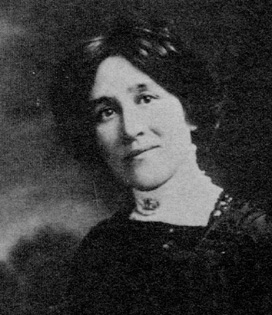
“Having grown up in upper-class pre-World War I society, Wharton became one of its most astute critics. In such works as The House of Mirth and The Age of Innocence she employed both humor and profound empathy to describe the lives of New York's upper-class and the vanishing of their world in the early years of the 20th century.” (www.wikipedia.org)

As what can be described a psychological realist, Edith Wharton was very famous for her ability to use fictional characters in fictional stories to critique both the psychological underpinnings and the very moral fabric of, in particular, New York’s society. Having been raised in a rather wealthy family during the “golden era” of New York’s gentry of the time, Edith Wharton is rather strangely able to both satirize its very existence and yet lament its decline. Having culled much of her material from her very own experiences, Edith Wharton’s tales revolve very much around class and social levels, with a clear hierarchy being defined among the aristocracy. Almost just as fiercely present are the themes of feminine equality and the man’s role in society; Wharton frequently enjoying laughs at the men’s expense.

Having read “The Other Two” very recently, I was unfortunately brought back in time to my own rather embarrassing times during my high school years where I found myself jockeying to find a position in the social hierarchy of the aforementioned educational institution. After having made the time warp back to 2004, an age when people were still watching the “Chapelle Show” and Kramer from Seinfeld was still thought to be funny, it made me realize just how much of a social creature man is. It is often said that a person who lives alone in social isolation for extended periods of time eventually goes mad, but I can’t help but think that society itself is maddening. People are so enraptured with their own miniscule and unimportant lives that they fail to realize what life is truly about! Reading “The Other Two” made me both sweat in nervous fear and laugh out uncontrollably. This short story really highlights how we create our own problems and Wharton’s use of reality through prejudiced characters truly highlights the psychological zoo that our modern day lifestyle has promoted. People in school are more interested in fitting in than learning, and I say people because I don’t just mean kids up to high school. Even my fellow classmates in college have this very same mentality, one that dictates that image and role in school is more important than making it to class and learning. Having spent a couple of years at CSM, I find that there more so than at Foothill people are much more uptight and as such tend to project their “ideal self image” (ie – mask) much more so than Foothill students. Rather than be natural, it almost seems like CSM is a stage and every student is an actor whereas Foothill people are much more laid back and fun to talk to.
Thursday, February 19, 2009

Henry James Journal

Fady Keilo
2/19/09
Eng 48B
Henry James Journal

“He worked for a living, however, and lacked the experiences of select schools, university, and army service, the common bonds of masculine society. He was furthermore a man whose tastes and interests were, according to the prevailing standards of Victorian era Anglo-American culture, rather feminine, and who was shadowed by the cloud of prejudice that then and later accompanied suspicions of his homosexuality.” (www.wikipedia.org)

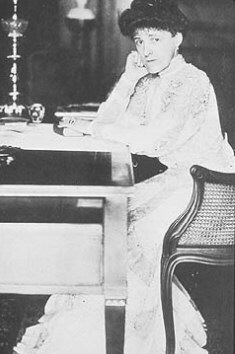
During the period of time that Henry James lived in, his position in society was quite a strange one. As an expatriated American, Henry James lived in the very rigid structured social ladder of British society of the time. As the son of a fairly wealthy theologian and intellectual of the 19th century, Henry James was exposed to European society at a fairly young age as he traveled across Europe for long periods of time. Having lived in European society for over two dozen years, Henry James visited America for the first time in twenty five years in 1905. As a protest to his country not joining the war on the Allied side, fighting against the Central powers, James officially expatriated America and became a British subject.

As a writer about American society and the comparisons and contrasts that it shares with European society, James is famous for comparing the often beautiful, civilized, but corrupt Old World with the bold, brash, and often aggressive American style of society. However, more than just that, James is famous for a lot of his works and the allusions to the feminist movement and other equality based themes. As an American man in Europe, James wrote very often about the trials and tribulations of the feminist movement and was often attacked for it. Not known for having any kind of the more common masculine bonds with other men in society, such as school or army service, James was often ridiculed and accused of being a homosexual, as if it were a negative thing (which back in the days, and to a lesser extent, even today, is a very prevalent notion). Add to that the fact that James was famous for writing about feminist topics and novels about the struggles of women, and the fact that the majority of James male friends and accomplices were either openly or suspected homosexuals and bisexuals, and you get a rather controversial figure in American and Trans-Atlantic writings that is hotly debated ‘til this day. It’s quite strange that upon reading about James and his biography, I find that although James is very famous for his writings, it seems he is almost just as famous for his “queer” (strange) lifestyle (pun intended ) and the controversies surrounding his lifestyle. Furthermore, for an American to expatriate and become a British subject seems to be a very daring and controversial move for an author.

Friday, February 13, 2009

Stephen Crane #2

Fady Keilo
Eng 48B
2/13/09
Stephen Crane Journal #2

“While en route to Cuba, Crane's ship sank off the coast of Florida, leaving him marooned for several days in a small dinghy. His ordeal was later described in his well-known short story, "The Open Boat".” www.wikipedia.org

Perhaps in a story about the indifference of nature to man’s existence, I like to look at this story, and Crane’s other works such as “Maggie”, as man’s struggle, not against nature and the indifference of the universe, but rather man’s struggle with society and the indifference of his fellow man (his of course in this case being a blanket statement for both men and women). While using the catalyst of man surviving against nature, Crane clearly delineates what it is like for man to face man’s nature, and having to deal with the harsh realities of ostracism and the need to fit into society. As a young man, it is quite obvious that Stephen Crane felt very connected to his fellow man caught in the plight of what might pass off as modern “civilization”, if it can be really called that. When Gandhi was asked what he thought of western civilization, he replied, “I think it would be an excellent idea.” Considering the fact that Stephen Crane was bitterly attacked by many folks for acting as a witness defending a prostitute, it is hardly difficult to consider that Stephen Crane’s metaphor of the merciless nature of the sea and the weather and its lack of compassion for the survivors’ dilemma is parallel to society isolating man on an “open boat” of indifference. When the poor are at the last rung of society, instead of offering them decent shelter and a job, the average passerby would rather give the bum a few quarters and perhaps a sigh of sympathy IF THAT. Instead of the cities and governments of the world funding huge war machines to flatten out other countries and massacre and ethnically cleanse the third world, couldn’t those very same cities and governments provide the homeless with housing and a decent job to get started? Of course this would all break down to socialism, which I despise because I feel man should be free and independent and not have to support others by the compulsory taxation of his own gains. In the so called land of liberty, Stephen Crane finds much to be cynical of. Our history of immigration is simply wave after wave of immigrants from different countries, and each ethnic group feels the need to stereotype and demonize the new wave of immigrants that has come after them in a never ending cycle of social stigma and ethnic hatred. So in a sobering sense, Stephen Crane’s “Open Boat”, and especially Maggie: A Girl of the Streets, is merely a Naturalists way of pointing out the fact that it is not nature and the universe that is indifferent to man but rather that man is indifferent to his fellow man.

Thursday, February 12, 2009

Stephen Crane 2-12-09

Fady Keilo
2/12/09
Eng 48B
Stephen Crane Journal

“Having little interest in university studies, he left school in 1891 and began work as a reporter and writer.” (www.wikipedia.org)

As what would be described, labeled, or defined as a “creative writer”, Stephen Crane apparently found very little need in going to the old schoolhouse. With such a style or genre in mind, it is of no doubt that an austere and rigid system of schooling would be of no use in helping an author spark his or her creativity. As a writer, Crane used his creativity to critique the social and moral standards of his time. Rather than sit in a classroom and read books about creativity and life, Crane decided to go to the school of hard knocks and moved to the dirty, downtrodden levels of society and exposed the moral dilemmas, as well as ironies, of the class of life below his own upbringings. Raised in a devout religious background, it is of no surprise that this rebel, driven by his motivation to expose the inequalities of society by “telling it as it is”, married the madam of a brothel. Although he was to die young, as an author he was very prolific until his early and painful demise. Remembered as perhaps the original naturalist, Crane is most famous for The Red Badge of Courage, and to a lesser extent Maggie. The strange thing about these two stories is the fact that Crane, having never experienced battle, wrote an incredibly detailed novella about the Civil War. Neither was he Irish, and yet he is famous for having written one of the most captivating novels with regards to the early Irish experience in America.

Much like other prolific artists of different kinds who died young, Crane is perhaps almost as famous for what he didn’t write. Having died so young, the literary discussions of perhaps what Crane could have been or could have wrote are almost as abundant as the discussions of what indeed he did write. Perhaps comparable to Tupac Shakur, if one were to look for a parallel in modern times, Crane’s prolific nature left caused for Crane to leave behind a rather large and lengthy body of work for someone who passed on so young. The ironic connection between Tupac and Crane happen to be the manners they died and how it is indicative of the times they lived in. Having died in the year 1900, Crane died in an era where medicine did not truly understand the causes of diseases and the existence of microbes. In those times, doctors would not even bother to wash their hands before surgery and people used to enter operating theatres with muddy boots and dirty clothes. So Crane passed on from what would be the awful death of the lower class in those days: tuberculosis. Tupac, on the other hand, died in an era of glorified violence. Indeed, many claimed that Tupac fell victim to the very violence he “glorified” (which is truly an ignorant statement if one understands where Tupac came from and the depth of his music). So, in turn, Shakur passed on young from the awful death prevalent in the modern day lower class: violence at the hands of his own people.


Friday, February 6, 2009

Maria Ruiz de Burton

Fady Keilo
2/6/09
Eng 48B
Maria Ruiz de Burton
“Although Ruíz de Burton was not shy to take full advantage of these insider connections over the course of her life, it is clear that she often found herself in contradictory positions, and simultaneously holding opposing views, while attempting to balance her heritage with her ideals.” (www.wikipedia.org)

As the first female Mexican-American author to write in English, Maria Ruiz de Burton can be found to be a pioneer in more than just one way. Married to a prominent officer of the American (and eventually Union) Army, she found herself stuck in a very precarious position to be in. As the daughter of very prominent Spanish Catholic Californios, Ruiz de Burton was born of the gentry of California, property owners who happened to have high ranking positions in the local Californian government. Her grandfather was not only the governor of the region at one point, but also the commander of the local troops in the region. Her great uncle was the commandate of the San Diego presidio. Born into what could be described as the aristocracy of the region, she had a difficult life after being wedded to a Protestant Army general of the invading forces which stripped her people of their land and titles. Through the use of corrupt laws and protracted litigations and biased tribunals, many squatters were able to strip the Californios of their lands that the “Anglo” squatters had no right to. Through the dual nature of her situation, as an oppressed native Californian as well as the wife of a prominent American general, Ruiz de Burton was able to critique the social injustices of the time by way of her connections to both the Californios as well as the Eastern establishment.

In point of fact, I feel very much that my own people’s history can be directly related to the circumstances that Ruiz de Burton wrote about. Her people were stripped of their land and their birthright, much like my people were as well. After the colonization of Syria, the British and in particular the French partitioned up the region according to their own whims and desires. The results of these bungles are apparent until this day and are not just in the Middle East. Africa, due to its being partitioned with no care with regards to tribal and ethnic territories and the bloodbaths that were guaranteed to ensue, had it much worse than the circumstances in the Middle East. However, what can be accurately described as the Israeli-Palestinian dilemma, as well as much of Syria’s historical lands and cities such as Antioch being given to Turkey, is without a doubt the workings of the colonial powers bungling up the region due to the drawing of modern borders without a care as to how the inhabitants of the newly drawn up lands would react. Syria’s being stripped of her most beautiful coast lines to Turkey, where all of Turkey’s most profitable tourist locations such as the Club Meds are located, as well as the Palestinians and Kurds being landless people, can be directly blamed on the imperialist policies of Europe.

Thursday, February 5, 2009

Sarah Orne Jewett journal

Fady Keilo
2/5/09
Eng 48B
Sarah Orne Jewett
“The young man had known the horrors of its most primitive housekeeping, and the dreary squalor that level of society which does not rebel at the companionship of hens.”

As a native of the rural areas around Maine, it’s quite clear that Jewett had a deep love of the area’s beautiful scenery and the “at home with nature” lifestyle that the local inhabitants practiced. As a young lady, hampered by rheumatoid arthritis (according to wikipedia), she frequently took walks as part of her treatment. Through these walks in nature and the beautiful local flora and fauna, Jewett developed a deep and passionate love for nature and its beauty. While the more “civilized” people of urban and industrial settings would frown upon such a lifestyle and deep bond with nature, it’s obvious from Jewett’s writings that the eventual urbanization of her childhood home was a driving factor in her story “White Heron”.

As an economic and social criticism of the times, Sarah Jewett’s use of a simple farm family and a wealthy young hunter as the characters in her story speaks volumes. The young man, having no love for the local land and being almost a stereotype of the capitalist, offers the poor “peasant” farm family a large sum of money (10 dollars to be precise) to divulge the location of a rare white bird that the hunter wished to admire by killing and stuffing. This young man, almost bourgeois in his demeanor and mannerisms, acts as if he is being gracious by coming into the “simple” home of this rural family. The way in which he describes the average home of the local rural people (used as the quote above) is almost innocently pompous. The fact that the family does not accept his rather large reward is confusing, as he doesn’t understand how a poor family wouldn’t want money. He can’t understand that not everything is a commodity to everyone, and that the little girl might have more love for the bird than for his measly ten dollars (which would be about 400 dollars now). As perhaps a Marxist criticism of capitalist society at the time, the “capitalist pig” hunter would be the wealthy industrialist who wishes to lay waste to the local inhabitants by destroying the land in pursuit of capital wealth and wage-enslaving the locals into only being able to survive off of laboring in his factories. Another spin on the Marxist criticism would be that the white heron represents independence and self reliance as opposed to wage earning in order to survive in an urban setting. As the stereotype of the literary scholar goes, the possible meanings of all the different symbols and archetypes is endless.


Friday, January 30, 2009

Sui Sin Far

Fady Keilo
1/30/09
Eng 48B
Sui Sin Far Journal
“But the Little One shrunk shrunk from her and tried to hide himself in the folds of the white woman’s skirt.”
As a narrative of the life of Chinese immigrants, Sui Sin Far’s “In The Land Of The Free” is a very ironic story and in many ways directly reflects the irony of the Chinese experience in North America and in particular in California. The irony, of course, of S.S.F.’s story of a Chinese couple and their “annexed” son is that after having become accustomed to the white people taking care of him, he no longer wished to return to his Chinese parents. This is indicative of the Chinese experience in California because many who came to San Francisco in search of fortunes to take back to China never were able to return to their wives and families. Perhaps due to the alienation of having become in some ways accustomed to Euro-American society, and in many ways due to the shame of returning dishonored (such as having their long hair cut off), these Chinese men who came in search of temporary work never returned to their far-away homes. Yet another parallel to this ironic situation is the manner in which the Chinese and other Asians were treated in America. As cheap labor, the development of the railroads and post-Gold Rush California was heavily dependent on the blood, sweat, and tears of these so-called “coolies”. Yet these very same people, instrumental in the development of western America, were treated like dirt and were not even considered capable of becoming American.
As an immigrant in modern day America, especially as an infant immigrant, I never had to endure the hardships expected of these day laborers. My father, on the other hand, had to work his tail end off just to be able to get his green card as a need employee for the company he worked for. Being put in such an unenviable position, my father had to be willing to do all the dirty work at his support systems company in the hopes that his labors would pay off with a recommendation for a green card due to his skills. He spent years of his life working a low paying job, doing rather difficult work that included both manual labor as well as computer skills, and in the end was awarded with his green card, and eventually citizenship. So in many ways I did not have to endure the difficulties and struggles of naturalization because it was gifted to me by my father who toiled like a “coolie” as well as my mother who was with him every step of the way.